

Pelvic Health Physiotherapy in Fernie BC
Are you struggling with pelvic pain, incontinence, or another pelvic health-related issue? Visit Ridgeline Physio, where our team can help assess and treat your issue. Our goal is to make the path to recovery clear and simple. We deliver evidence-based treatment, as well as the tools and knowledge for long-term success.
Proudly providing pelvic health care to the Elk Valley and surrounding areas, including Fernie, Jaffray, Sparwood, Elkford, Elko, Grasmere, Crowsnest Pass, and beyond.
What is Pelvic Health Physiotherapy?
Pelvic health physiotherapy, also known as ‘pelvic floor physiotherapy’ is a specialized branch of physiotherapy that addresses concerns & conditions that involve your pelvic region.
The pelvic floor muscles are a group of muscles that attach to the pelvic bone and sacrum. They also wrap around your urethra (where urine comes out), rectum, and vagina (in women). The pelvic floor muscles must be able to function well to allow for effective urination, bowel movements, and sexual function.
Therapists that work in pelvic health physiotherapy have undergone additional training in this area. We are proud to offer pelvic health physiotherapy services to all genders and competent and welcoming care to LGBTIQA+ people in Fernie and the Elk Valley.
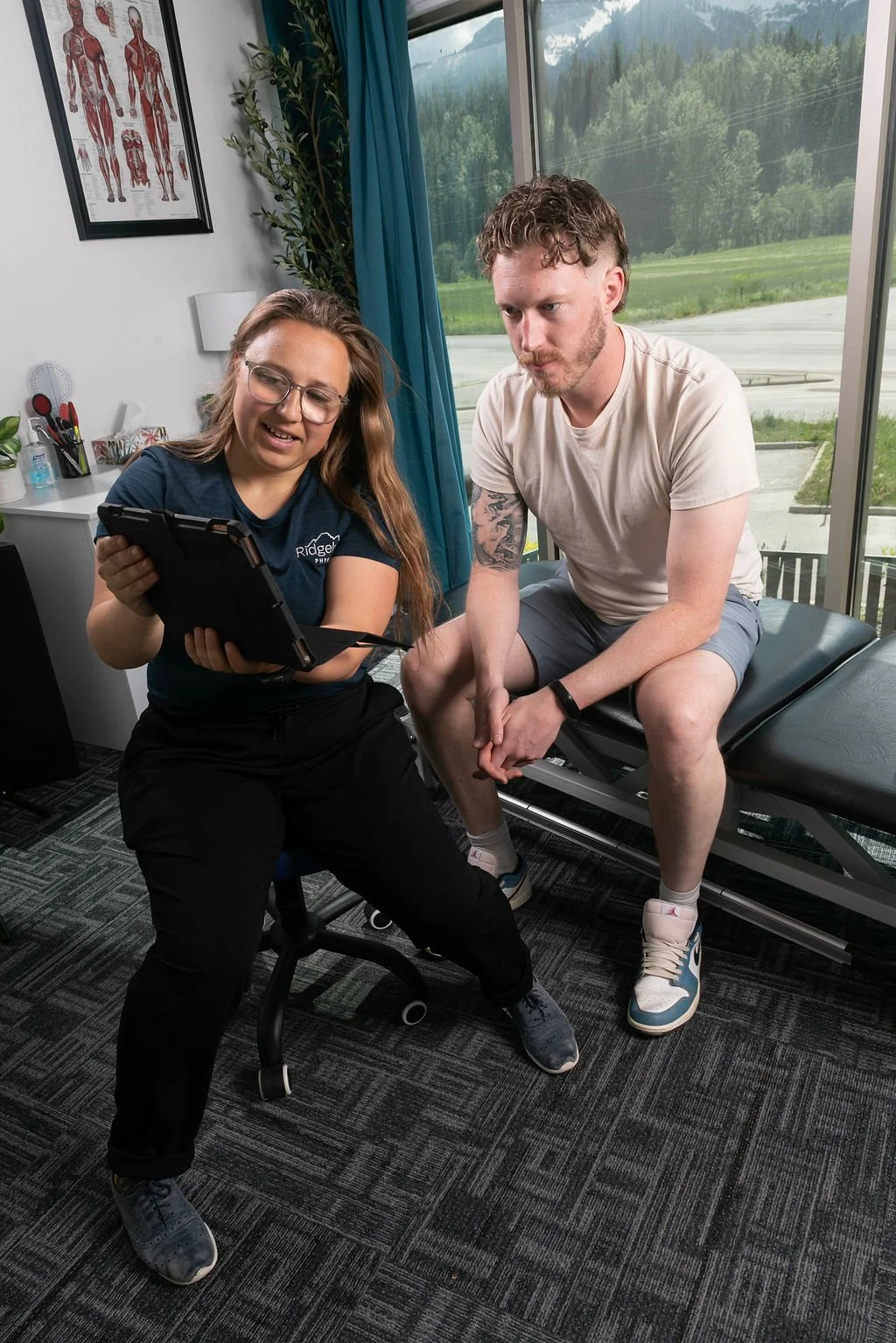
Pelvic Health Conditions We Treat at Ridgeline Physio
Support through Pregnancy and postpartum
Urinary Frequency (e.g., peeing more than every 3-4 hour)
Urinary Incontinence (e.g. leakage when you cough or sneeze)
Fecal/bowel Urgency and incontinence (difficulty controlling bowel movements)
Pelvic Pain/ Tailbone Pain
Irritable Bowel Syndrome (IBS) related symptoms such as constipation
Pelvic pain including pain with penetration (e.g., sex)
Menstrual/period related pain
Endometriosis
Menopause Support
Recovery after pelvic surgeries such as prostatectomy or hysterectomies
Pelvic heaviness and pelvic organ prolapses

Other Areas Where Pelvic Health Physiotherapy Can Help
You may benefit from Pelvic Health Physiotherapy if you fall into any of these groups of people:
Pregnancy: During your pregnancy we can help prepare for delivery, assist you in staying active, manage symptoms such as pelvic pain and incontinence, as well as prepare for post-partum care. You don’t need to be actively experiencing symptoms to come in for an assessment during your pregnancy.
Preparing or Recovering from Prostatectomy: Following surgery many people experience swelling, urinary incontinence and changes in sexual function. Physiotherapy can help play an important role in preparing you for surgery and managing these symptoms afterwards.
Transitioning into Menopause: There are a lot of changes that occur during menopause such as loss of bone and muscle mass, vulva and other differences “down there”, irritation and pain etc. We can help support you identify these changes before they become problematic and help to keep you doing the things you love.
Living with Endometriosis: Endometriosis can come with a whole host of symptoms including painful periods, frequent urination, painful bowel movements, pelvic pain, bloating etc. We can help you understand your diagnosis better, educate you on treatment options and work together to better manage your symptoms.
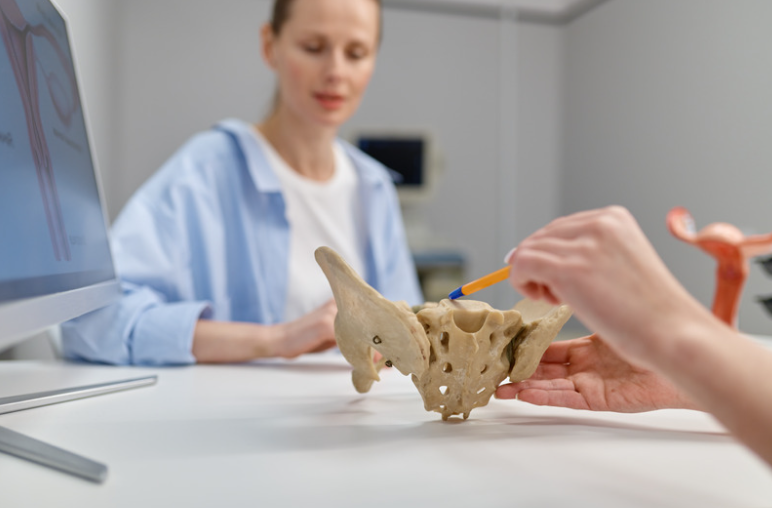
What to Expect During Your Pelvic Health Assessment
Confidentiality: Every interaction between you and your therapist is bound by confidentiality.
Compassion: Pelvic health concerns can come with many emotions including anxiety, stress, fear or depression. As such we always take a holistic approach when working with our patients. We listen and acknowledge each person’s unique story and acknowledge that your experiences and feelings exist can play a very large role in your recovery.
Medical History: This step is very important. You will be receiving some handouts a head of time. They may seem a bit long, but they are very important. They allow our therapist to understand your story better and prepare for your appointment ahead of time.
Orthopedic Assessment: Some may think of this part as “what typical physiotherapy” may look like. In this part your physiotherapist will examine areas commonly linked to your pelvic health including your back, hips, posture and movement.
Breathing Assessment: Since our pelvic floor is impacted by our diaphragm it is important to looking at how you breath.
A Team Approach: Your physiotherapist and you will work together to make a plan that best suits your needs. Your physiotherapist is there to support you through your recovery with guidance, education and support.

Common Questions About Pelvic Health Physiotherapy
-
Comfortable clothing is best! During your session, your physiotherapist may want to perform exercises, or look at the movement of your back, hips, and pelvis. Wearing comfortable clothing will help you feel more comfortable taking part in the session
-
Nope! No internal exam will be performed. If one is required, the physio and the patient will make a plan around it.
-
Assessments are 1 hour. However, we appreciate this may be new to most people and there is a lot to go through on the first day. As such, it is common for us to continue the assessment over a couple of sessions. These sessions are at your own pace.
-
We sure do! We are proud to provide pelvic health physio to all genders. Common conditions we support with pelvic health physio in males are:
Urinary Frequency (e.g., peeing more than every 3-4 hour)
Urinary Incontinence (e.g. leakage when you cough or sneeze)
Fecal/bowel Urgency and incontinence (difficulty controlling bowel movements)
Pelvic Pain/ Tailbone Pain
Irritable Bowel Syndrome (IBS) related symptoms such as constipation
Recovery after pelvic surgeries such as prostatectomy or hernias
-
Pelvic Floor Physiotherapy can feel very awkward at first, but that feeling usually fades quickly once the session begins.
Talking about intimate topics such as bathroom habits, sex, urinary leaks, and sexual pain with a stranger can feel intimidating. These are vulnerable topics that we don’t often talk about, but can be incredibly debilitating in daily life.
I can promise you, our Pelvic Health Physio has heard it before.
What Reality Looks Like in an Appointment
Our Pelvic Health Physio is clinical and professional. They see this all the time, it’s like treating a knee or a shoulder, it’s just a different part of the body.
You are in control of the conversation. You can stop and ask questions, skip questions, or stop the exam at any time.
Our Physio has extensive training and experience, nothing you say or do will shock them.
Our Pelvic Health Physio will always emphasize your comfort and it is important to know that consent guides every part of the process
-
Nope! You do not need a physician referral to go to Pelvic Health However, some extended health insurance providers may require a referral for reimbursement. If you are unsure, it is a good idea to check your individual insurance plan before your appointment.

Other Clinical Services We Offer