
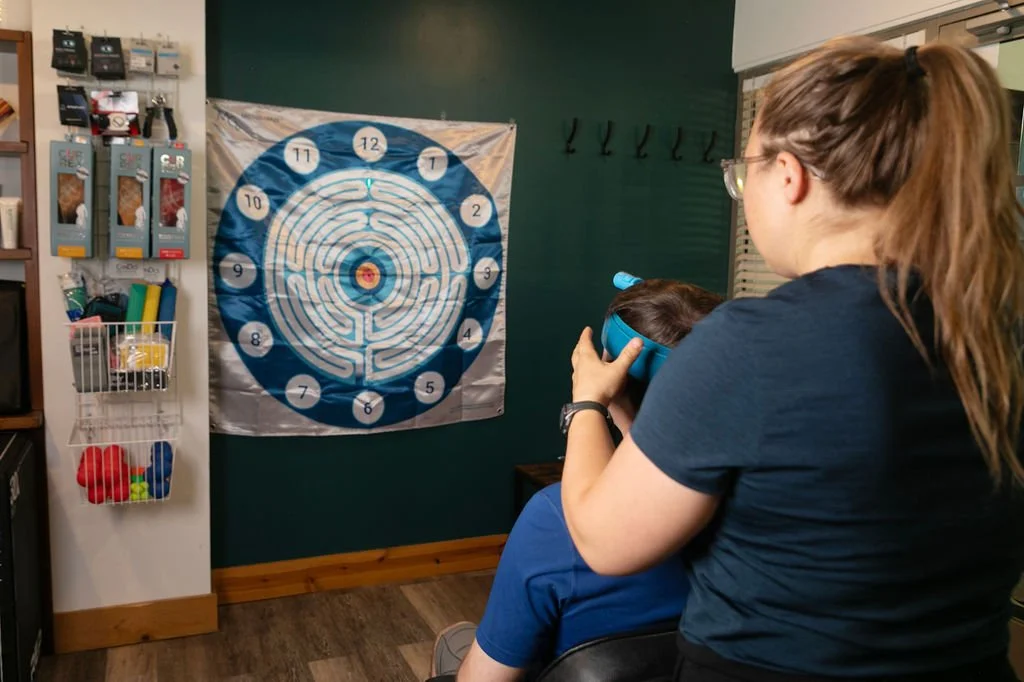
Concussion Physiotherapy in Fernie BC
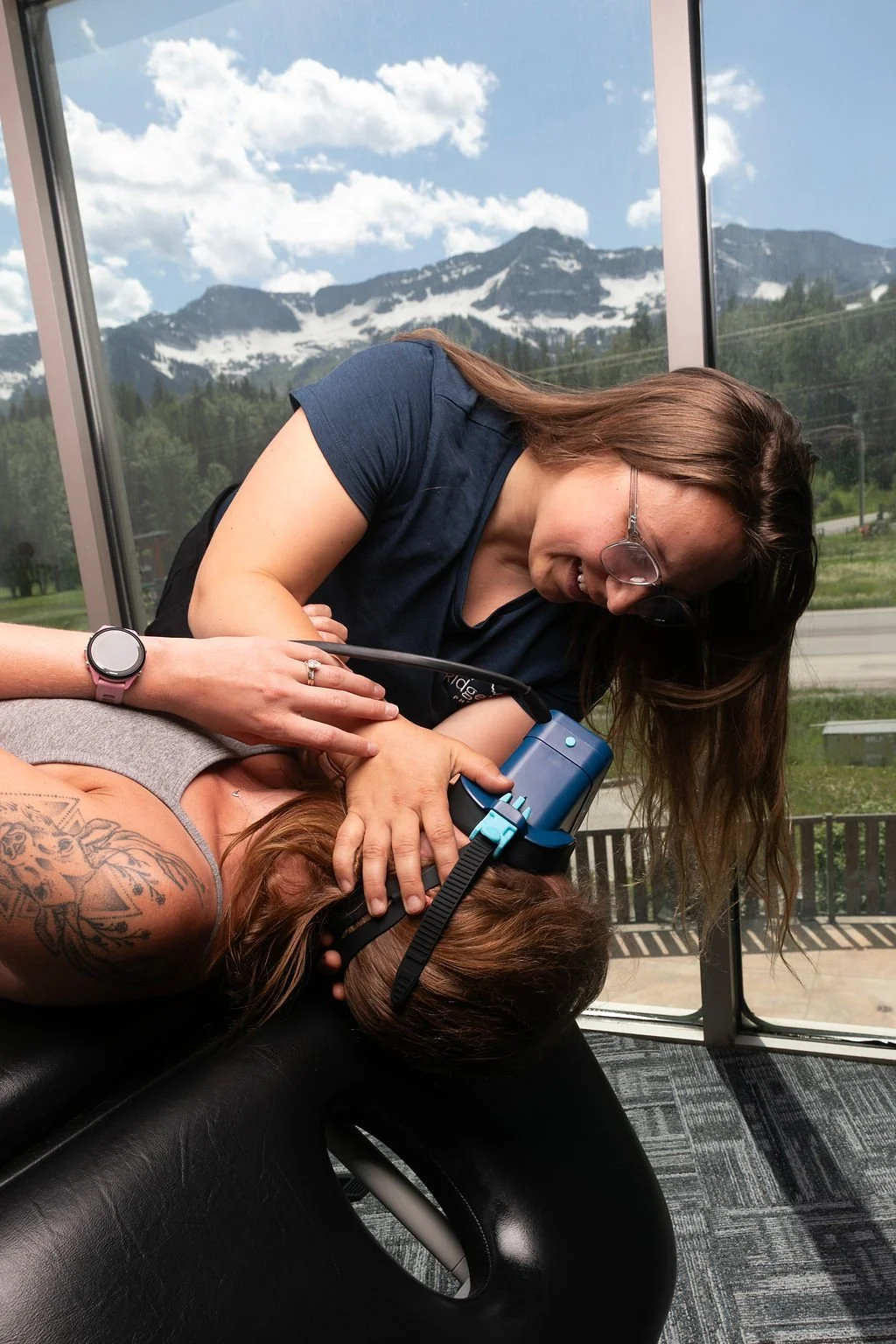
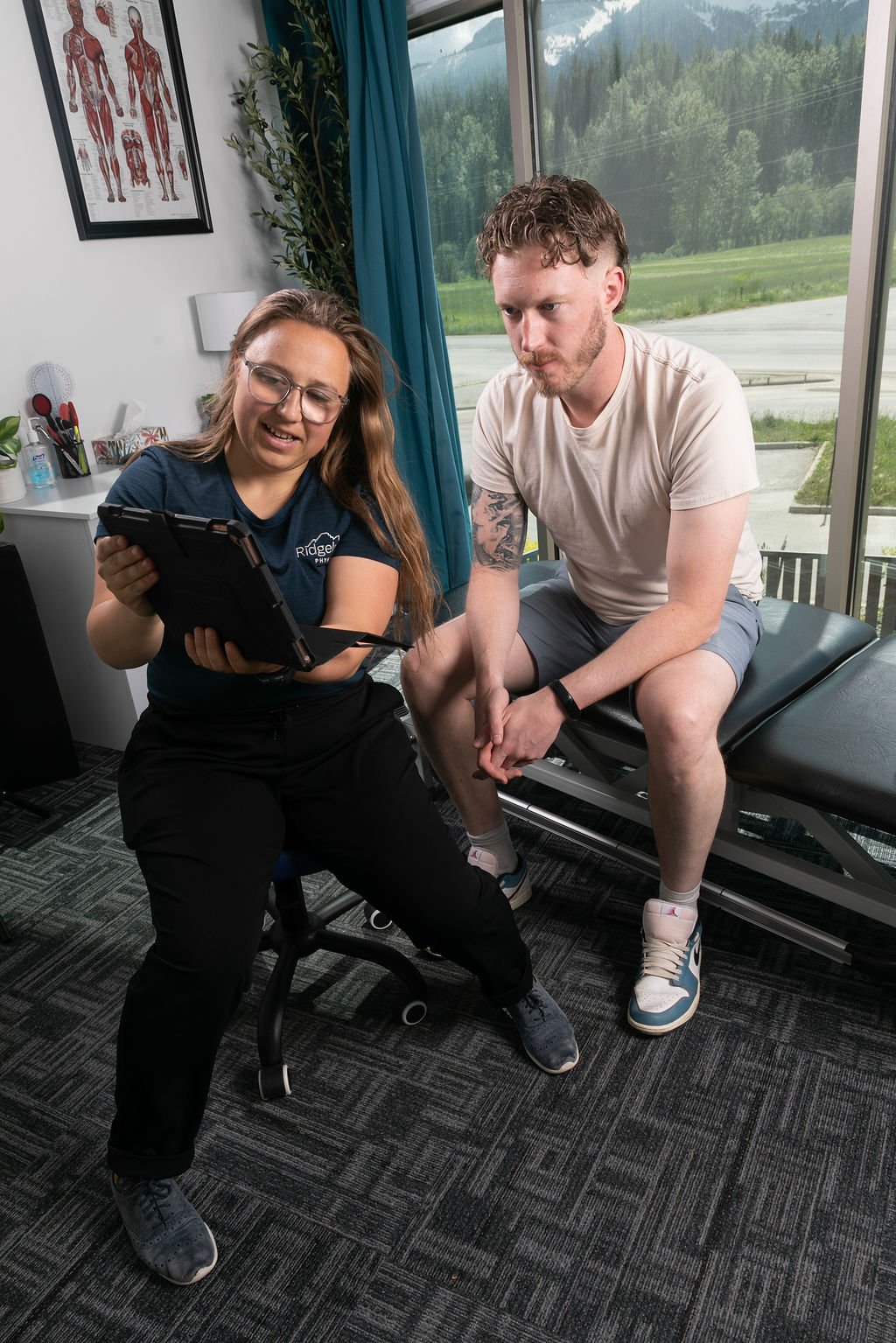
At Ridgeline Physio, we’re dedicated to helping people in Fernie who are struggling with concussion symptoms. Our goal is to help you get back to your life as normal. Our concussion programs include assessment, treatment, and education, so you can feel confident about getting active again.
Proudly providing concussion care to the Elk Valley and surrounding areas, including Fernie, Jaffray, Sparwood, Elkford, Elko, Grasmere, Crowsnest Pass, and beyond.

What is a Concussion?
Concussion injuries are a type of mild traumatic brain injury that cannot be seen on routine x-rays, CT scans or MRI’s.
A concussion occurs when the head is forced to move rapidly due to a blow or jarring of the head, neck, face or body. Many people relate concussion injuries to sports such as football, rugby and hockey, but concussions can easily happen at home too. We assess and treat an equal number of people who suffer a concussion at work or at home due to falls and falling objects.
At Ridgeline Physio, we know that concussions can have a significant impact on quality of life. We take even mild concussions very seriously, and can give you the treatment and knowledge to get back to normal as quickly as possible.
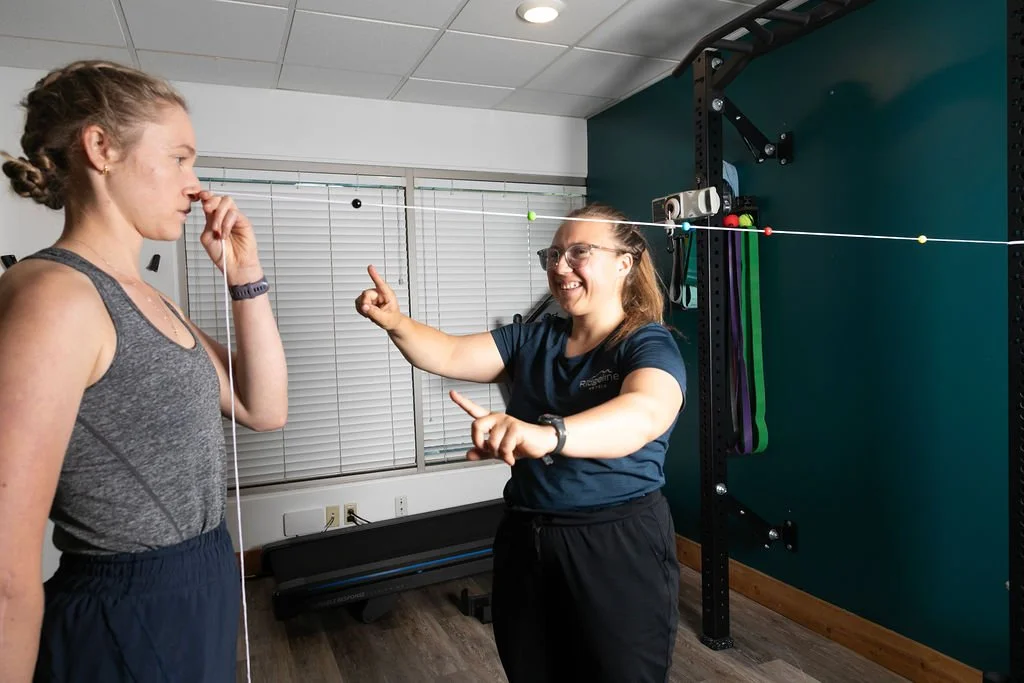
How to Recognize a Concussion
Mechanism of Injury: Jarring of the head or a blow to the head, neck, or body
Loss of Consciousness (Knocked Out): Although loss of consciousness is a clear indicator of a concussion, you do not need to have lost consciousness to have a concussion.
Headache
Nausea or vomiting
Memory Impairment
Dizziness
Fogginess
Blurred vision
Sensitivity to light or sound
Balance Issues
Fatigue/Tired/Low Energy
Ringing in the ears
Memory Problems
Problems concentrating
Thinking slowed down or “in a fog”
Sleep Disturbance (more or less than usual)
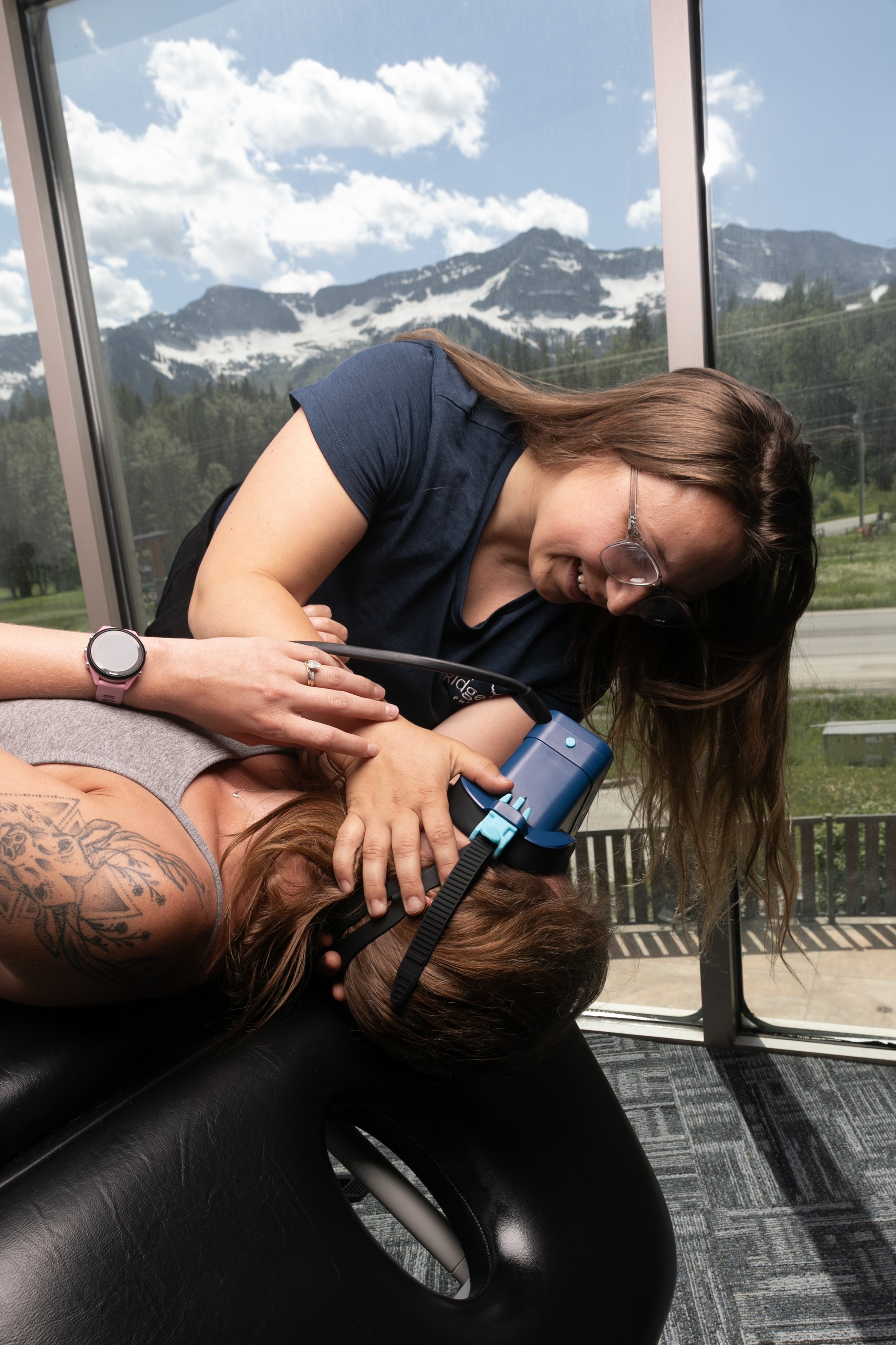
How Can Physio Help a Concussion?
Concussions can impact individuals across many different areas of the brain. Each person’s concussion is going to have slightly different symptoms, so each person’s treatment looks different. Treatment will be individualized to your needs.
Treatment can include:
Balance Training
Planning and Pacing Education
Aerobic Exercise
Strength and Conditioning Exercise
Graded Return to Exercise and Sport
Return to Work/School Planning
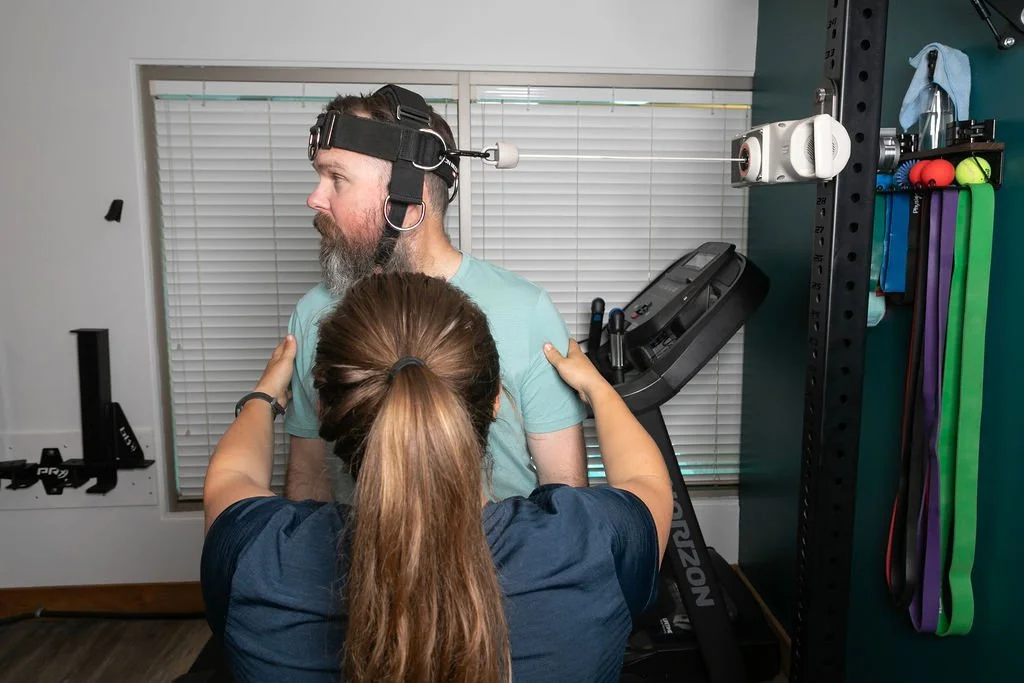
First Steps if You Have a Concussion
Stop the activity immediately. Continuing risks making the concussion more severe and symptoms longer-lasting. Do not return to play the same day.
Get checked out by a medical doctor as soon as possible.
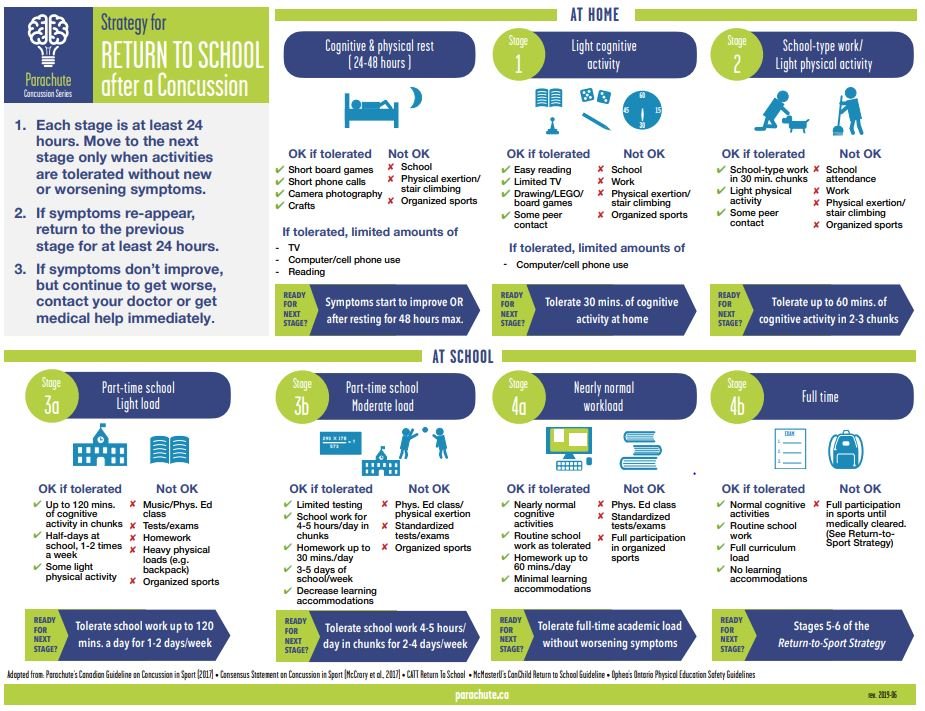
Rest for 24-48 hours. This is the time to rest your brain and your body. That means no work/school/screens. After this begin light cognitive and physical activity.
See a physiotherapist who specializes in concussion care as soon as possible, ideally within 3-days of your injury. Early access to care can significantly reduce the risk of prolonged concussion symptoms.
Start aerobic exercise such as walking or stationary cycling for 20mins/day as tolerated as soon as possible. Go as slow as you need to not increase your symptoms more than 2/10 above your baseline.
As you’re recovering from a concussion, you want to slowly expose yourself to activities that may irritate your symptoms. The goal is to challenge your brain without making your symptoms significantly worse. This might mean limiting activities such as exercising, driving, screen time, work or school.
Do you know how to recognize the signs and symptoms of a concussion? Read more in our Blog.
Important Resources
Parachute Canada has amazing resources for Concussion Education: Find out more at www.parachute.ca/
Guide for Parents and Caregivers: https://parachute.ca/wp-content/uploads/2019/06/Concussion-Guide-for-Parents-and-Caregivers.pdf
Guide for Athletes: https://parachute.ca/wp-content/uploads/2019/06/Concussion-Guide-for-Athletes.pdf
Guide for Parents and Caregivers: https://parachute.ca/wp-content/uploads/2019/06/Concussion-Guide-for-Coaches-and-Trainers.pdf
Guide for Teachers: https://parachute.ca/wp-content/uploads/2019/06/Concussion-Guide-for-Teachers.pdf
Return to School Strategy: https://parachute.ca/wp-content/uploads/2019/06/Return-to-School-Strategy.pdf
Return to Work Strategy: https://parachute.ca/wp-content/uploads/2020/03/Concussion-ReturnToWork-UA.pdf
Return to Sport Strategy: https://parachute.ca/wp-content/uploads/2019/06/Return-to-Sport-Strategy.pdf
Frequently Asked Questions about Concussion Physiotherapy
-
A concussion is a type of mild traumatic brain injury caused by a blow to the head, face, neck, or body that causes the brain to move rapidly inside the skull.
Loss of consciousness is not required to have a concussion. In fact 95% of concussions have no loss of consciousness.
-
Concussion symptoms vary from person to person and may include:
Headache or head pressure
Dizziness or balance problems
Nausea
Sensitivity to light or noise
Brain fog or difficulty concentrating
Fatigue
Visual strain or blurred vision
Neck pain
Sleep disturbances (sleeping too much or too little)
Mood changes (irritability, anxiety, low mood)
-
Recovery timelines vary depending on the severity of the injury and the care received. About half of people start to feel better within 2–4 weeks, but many experience symptoms that last longer. Concussions can last months to years in some cases.
Persistent symptoms do not mean the concussion is permanent — they often reflect treatable issues involving the neck, vestibular system (balance), vision, or the nervous system.
-
Absolutely! Physiotherapy plays a key role in concussion care. At our physio clinic in Fernie, concussion physiotherapy includes:
A comprehensive multi-systems assessment to assess specifically where your brain is not functioning to its optimal capacity. Treatment then depends on your assessment findings. This could include:
Neck (cervical spine) assessment and treatment
Vestibular (balance and dizziness) rehabilitation
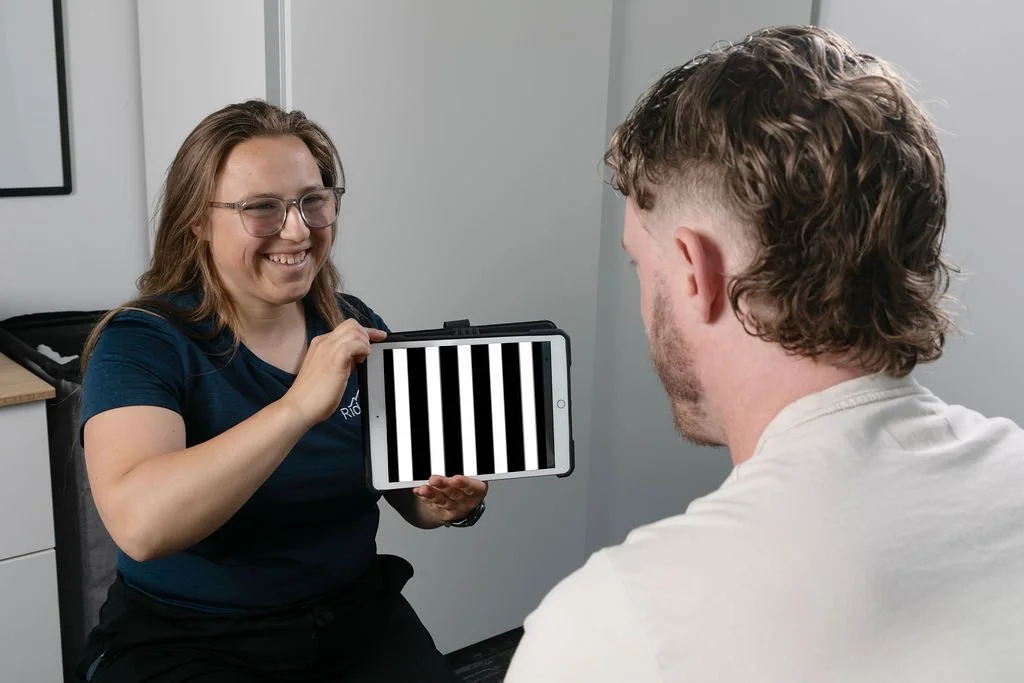
Visual and eye movement assessment and rehabilitation
Gradual return-to-sport, return-to-work, and return-to-school planning
Exercise progression
Education and pacing strategies
Assessment and rehabilitation of the Autonomic Nervous System to support nervous system recovery
Concussion care is individualized — no two recoveries look exactly the same.
-
Most concussions do not show up on CT or MRI scans. Imaging is typically only required if there are red flags such as worsening symptoms, neurological changes, or concerns about more serious injury.
A normal scan does not mean symptoms aren’t real — concussion is a functional injury, not a structural one.
-
We want to see you as soon as possible after a concussion. The earlier you access care the better your recovery will be. The most ideal time would be to see you between day 1-3. Often this is not possible, and ideally we want to see folks within the first 10days after their injury. If we have nothing available on our online booking please go on our waitlist and give us a call for priority booking.
Note that if it has been more than 10days, treatment is still important. We can treat anyone at anypoint for a concussion whether that be days, months, or years after the injury.
-
You do not need a referral to see a physiotherapist.
-
You can start concussion physio before you see your doctor. We do recommend you see your doctor after a concussion, but it doesn’t matter what order you see your us in, whichever you get into first is good! If you you have any red flag symptoms (see above), please go to the emergency room immediately.
-
Stop the activity immediately. Continuing risks making the concussion more severe and symptoms longer-lasting. If you think you may have a concussion, you will not return to sport where you may risk hitting your head again for at least 14days due to the risk of Second Impact Syndrome.
Get checked out by a medical doctor as soon as possible.
Rest for 24-48 hours. This is the time to rest your brain and your body. That means no work/school/screens. After this begin light cognitive and physical activity.
See a physiotherapist who specializes in concussion care as soon as possible, ideally within 3-days of your injury. Early access to care can significantly reduce the risk of prolonged concussion symptoms.
Start aerobic exercise such as walking or stationary cycling for 20mins/day as tolerated as soon as possible. Go as slow as you need to not increase your symptoms more than 2/10 above your baseline symptoms.
As you’re recovering from a concussion, you want to slowly expose yourself to activities that may irritate your symptoms. The goal is to challenge your brain without making your symptoms significantly worse. This might mean limiting activities such as exercising, driving, screen time, work or school.
-
Short-term rest is important for the first 48 hours, but prolonged complete rest actually makes your concussion recovery worse.
As you’re recovering from a concussion, you want to slowly expose yourself to activities that may irritate your symptoms. The goal is to challenge your brain without making your symptoms significantly worse. This might mean limiting activities such as exercising, driving, screen time, work or school.
-
Yes — when done appropriately. Carefully prescribed exercise is often an important part of concussion recovery. During the first 2 weeks we want to focus on steady state aerobic exercise (keeping your heart rate the same throughout the exercise). We want to do exercise that has a low risk of hitting your head again such as stationary biking, walking, rowing machine or swimming.
Exercise can help:
Improve blood flow to the brain
Regulate the nervous system
Reduce dizziness and fatigue
Support mood and sleep
Your physiotherapist will guide intensity, duration, and progression to stay within safe limits.
-
Ongoing symptoms are sometimes referred to as persistent post-concussion symptoms. This does not mean your brain is permanently damaged.
Symptoms often persist because specific systems haven’t fully recovered — such as vision, balance, neck function, or nervous system regulation — all of which can be addressed with targeted physiotherapy care.
A concussion can be treated at anytime, from days to years after the injury
-
Yes. Neck injuries commonly occur alongside concussions, especially with falls, sports injuries, or motor vehicle collisions.
Neck dysfunction can contribute to:
Headaches
Dizziness
Visual symptoms
Difficulty concentrating
This is why neck assessment is a key part of concussion physiotherapy at Ridgeline Physio.
-
Yes. We work with recreational and competitive athletes of all ages.
Our Fernie physiotherapy team provides:
Return-to-sport progression
Sport-specific rehab planning
Education for athletes, parents, and coaches
Safety and long-term brain health are always the priority.
-
Concussion treatment is typically covered under physiotherapy benefits, depending on your extended health plan. We do provide direct billing to most insurance providers
-
Yes! Although we prefer it to be in-person, we do provide virtual concussion rehabilitation. Book Online as a “Virtual” / “Telehealth” Assessment. To access our virtual services you do need to live in British Columbia.
-
At Ridgeline Physio, concussion care goes beyond symptom checklists. No generic approaches, we take out the guessing of what is happening with your brain. We complete a thorough assessment of each system that get impacted after a concussion and execute an individualized evidence-based treatment plan specific to your body and brain.
We understand the uncertainty that comes with concussion symptoms, and we aim to make the recovery process clear, supportive, and manageable.
Book Concussion Physiotherapy in Fernie
If you’ve had a concussion — recently or in the past — physiotherapy can help guide your recovery.
You can book a concussion assessment at Ridgeline Physio by:
Booking online through our website
Calling our Physiotherapy Clinic in Fernie
Asking your physio if concussion treatment is right for you